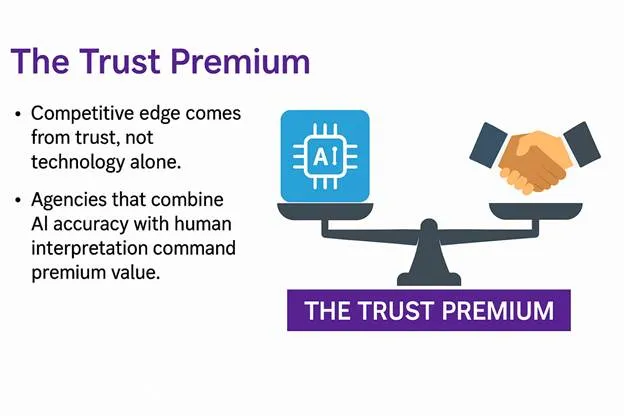
In an AI-driven, machine-led transaction-first economy, trust is the only sustainable advantage and the most valuable currency in business, leadership, and collaboration.
 For decades, business culture has treated trust as a “soft” asset. Important, perhaps, but secondary to scale, speed, efficiency, and technological advantage. That hierarchy no longer holds.
We are now operating inside an ecosystem defined by automation, algorithmic decisioning, and data-driven optimization. Transactions move faster than relationships can form. Artificial intelligence increasingly intermediates judgment. Metrics have replaced meaning as the default language of value. And yet, amid this acceleration, a paradox has emerged. The more technology advances, the more human trust becomes the scarcest and most valuable resource in the system.
Trust is no longer a moral aspiration. It is an economic differentiator. It is the premium that separates sustainable leadership from brittle performance, durable brands from disposable ones, and meaningful collaboration from mere coordination.
In today’s marketplace, technology may scale capability, but trust determines adoption, endurance, and legitimacy.
Trust as the Only Human-Dependent Currency
Unlike data, trust cannot be automated. Unlike compliance, it cannot be mandated. Unlike reputation, it cannot be manufactured through repetition alone.
Trust is relational, contextual, and cumulative. It is built slowly through consistent behavior, clear intent, and grounded values. It is lost quickly through misalignment, opacity, or perceived betrayal. And once broken, it cannot be restored through efficiency or technical superiority alone.
This is why trust functions as the only truly human-dependent and reliable currency in a system increasingly optimized for non-human decision making.
Algorithms can predict behavior, but they cannot guarantee integrity. Platforms can enable connection, but they cannot create commitment. AI can generate insight, but it cannot establish meaning or moral alignment. Trust lives in the space between intent and action. It requires human judgment, emotional fluency, and ethical coherence.
Organizations that mistake technological competence for trustworthiness confuse performance with legitimacy. They optimize systems while eroding relationships. In doing so, they forfeit the very premium that determines long-term value.
What do Satya Nadella of Microsoft and Arthur Sadoun of Publicis Groupe say about trust? Free and paid subscribers can continue reading and learn how they have established trust as currency at their companies. You’ll also learn one of the most dangerous misconceptions in modern enterprise culture and the operational foundations for trust in complex systems. Scroll down to discover how to achieve the trust premium in practice and why establishing trust as a core strategy is a game-changer in a tech-driven, data-led business ecosystem. The Myers Report delivers a unique blend of leadership philosophy, economic forecasts, business guidance, and future-focused perspective for $95 annually. To receive subscriber-only content each week become a subscriber.
